Kay Strange
Towards ZeroKay Strange, Nevile Strange’s twenty-three-year-old wife, is introduced as strikingly beautiful and socially lively, but the planned gathering at Gull’s Point quickly exposes the insecurity and anger beneath her bright manner. She wants a life of travel and resents the prospect of sharing a house with Nevile’s former wife, Audrey Strange. As the reunion approaches, her jealousy becomes a force in the household’s conflicts and in the suspicions surrounding the murder inquiry.
Identity and Introduction
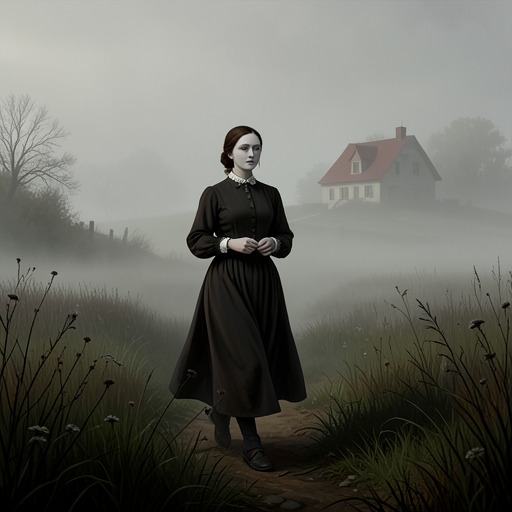
Kay is described as having dark red hair, dark eyes and brows, a slender figure, and unusually clear skin that requires little make-up. The narration’s initial emphasis on her appearance establishes the polished, conspicuous image she presents; subsequent scenes complicate that image with impatience, emotional strain, and an ability to speak forcefully when she feels threatened.
At breakfast, Nevile greets her lightly as she sits on the glass-enclosed verandah drinking orange juice. Their exchange is familiar and playful, but it occurs against the shadow of a concern Nevile carries that morning. Kay’s easy domestic banter therefore introduces a marriage that appears companionable on the surface while other pressures are already present for him.
Travel, Gull’s Point, and the Marriage
Kay tells Nevile that an invitation has arrived for a yacht trip to Norway at the end of June, and says she would love to go, though they cannot. Her wish for the trip stands against the plan for September: she and Nevile are to spend a fortnight at Gull’s Point. She asks whether they have to go to Lady Tressilian’s, revealing her reluctance to enter a place that Nevile regards as home.
Nevile explains that Sir Matthew was his guardian and that he and Lady Tressilian looked after him. Kay’s resentment is thus set against a history of care and obligation that predates her marriage. She does not share Nevile’s sense of belonging at Gull’s Point, and the impending visit is more than an inconvenient social arrangement: it puts her in proximity to the woman she regards as a rival.
Before the September gathering, Kay describes the planned party to Ted Latimer as a prospect of seeing Nevile, herself, Nevile’s former wife, and a Malayan planter home on leave. She is also told that Ted has booked a room at the Easterhead Bay Hotel. The arrangement places the former couple and their new partners within the same social orbit, a configuration Kay anticipates as a party but later experiences as a threat to her marriage.
Jealousy and Escalating Conflict
At one encounter, Nevile stands between Kay and Audrey as both appear to reach for the same picture paper. Kay insists that it be handed to her, while Audrey withdraws her hand and explains that she had thought Nevile was speaking to her. Nevile’s embarrassment is visible, and Thomas Royde steps forward to give the paper to Audrey. The small social confusion becomes charged because Kay interprets the moment through the rivalry she already feels.
Afterward, Kay says she loathes the house and the people in it, and threatens that someone may be killed, naming Nevile or Audrey as possible targets. She then leaves, slamming the door. The outburst is not evidence that she has acted on the threat, but it shows how quickly her resentment turns into open hostility. Thomas, unsettled by emotional scenes, is relieved when she departs.
In a later confrontation with Nevile, Kay refuses the prospect of divorce and rejects his offer to provide for her. She says she married him because she loved him and connects his change in attitude to her having followed him to Estoril. In her account, Nevile wanted to believe their relationship was governed by fate, and her intervention wounded his vanity. She also insists that Audrey intends to regain him and that she will not permit the marriage to end. These are Kay’s accusations and interpretation of the conflict, not an independently confirmed account of Audrey’s intentions.
The Murder Inquiry
When Superintendent Battle questions her, Kay is brought in after Sergeant Jones has arranged for her and Nevile not to meet. She appears both frightened and excited, dressed in a tweed skirt and purple sweater, with her red hair prominent against the dark interior. Inspector James Leach leads her through the previous evening. Kay says she had a headache, went to bed at about a quarter past nine, slept heavily, and heard nothing until she was woken by a scream the following morning.
Battle’s silence prompts her to volunteer that she and Nevile had quarrelled before tea. She says she was furious, went upstairs, and locked her bedroom door because she remained angry. Asked what the dispute concerned, she blames another woman and explains that Nevile had been persuaded into the plan for everyone to meet at Gull’s Point. Kay believes he thinks the idea was his own, while she sees Audrey’s influence behind it. She further alleges that Audrey used her manner and apparent interest in Thomas Royde to make Nevile jealous. Battle listens without endorsing her theory, and Kay’s account remains a statement of her belief rather than proof of the scheme she describes.
Change and Narrative Role
When Battle returns to the drawing-room, Kay abruptly accuses Audrey of having been up to something all along. Mary Aldin asks her to stop, and Nevile sharply tells her to be quiet. Ted Latimer instead approaches her as she begins to cry, urging her to steady herself and reminding Nevile that Kay has been under strain. The scene gathers together her jealousy, the pressure of the inquiry, and the uneven support she receives from those around her.
Kay’s role in the mystery rests on the contrast between what she reports and what her emotions lead her to conclude. She supplies specific details about her bedtime, the locked door, and the quarrel, but she also interprets the reunion as Audrey’s deliberate revenge and reads ordinary interactions as signs of a plot. Her forceful certainty makes her accusations consequential without making them reliable. The evidence presented here ends with her distress and accusation, not with a resolution of her marriage or a definitive account of what she knew.